Interface design for Q-interactive, Pearson's iPad testing platform
Visit website
pearsonassessments.com
Challenge
Standardized clinical assessment of children ran on paper: heavy test kits, memorized start points and discontinue rules, a stopwatch in one hand and a scoring pencil in the other. Every mechanical step pulled the examiner's attention away from the child in front of them, and hand scoring introduced errors with real consequences for diagnoses and services.
Approach
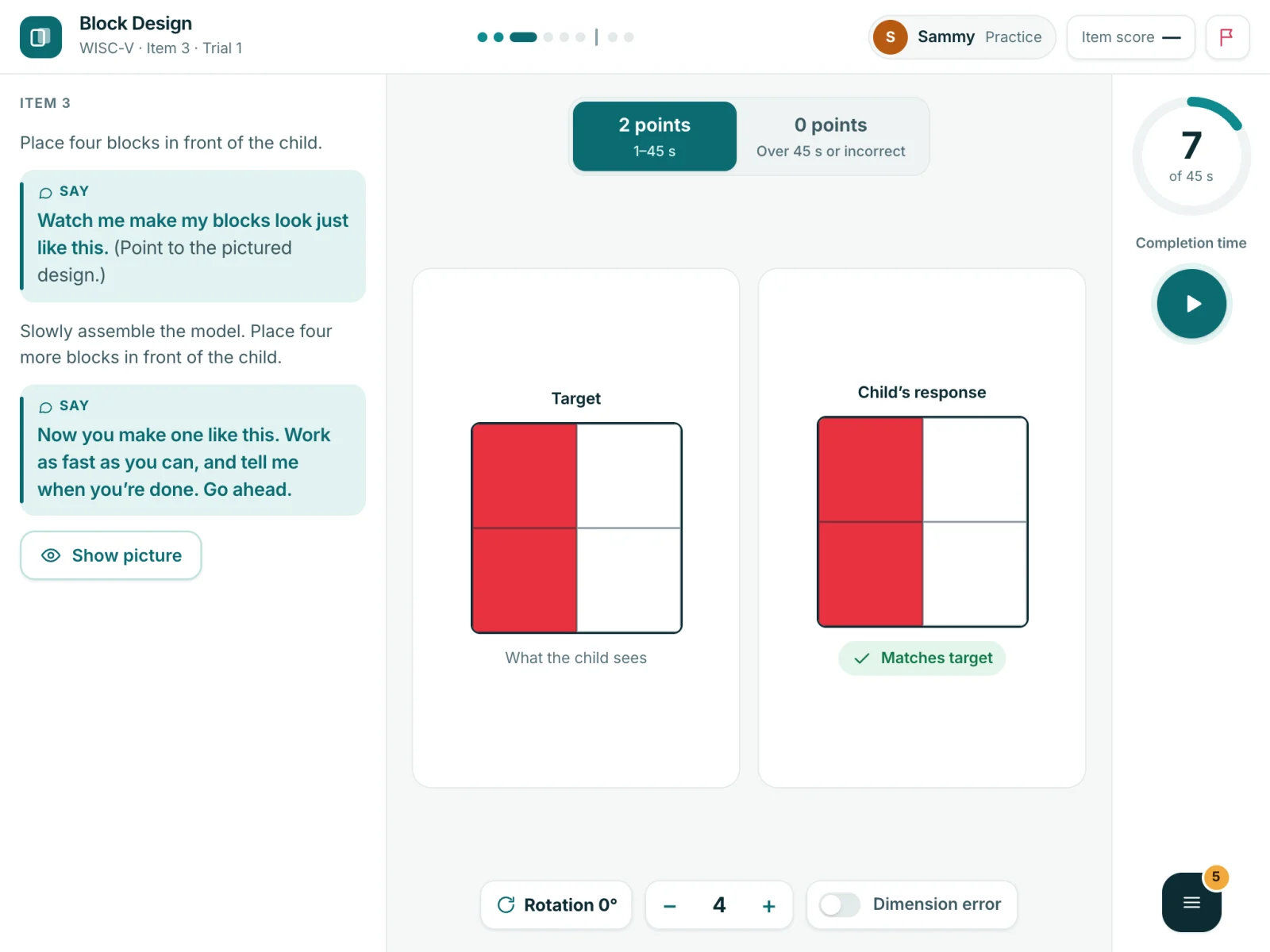
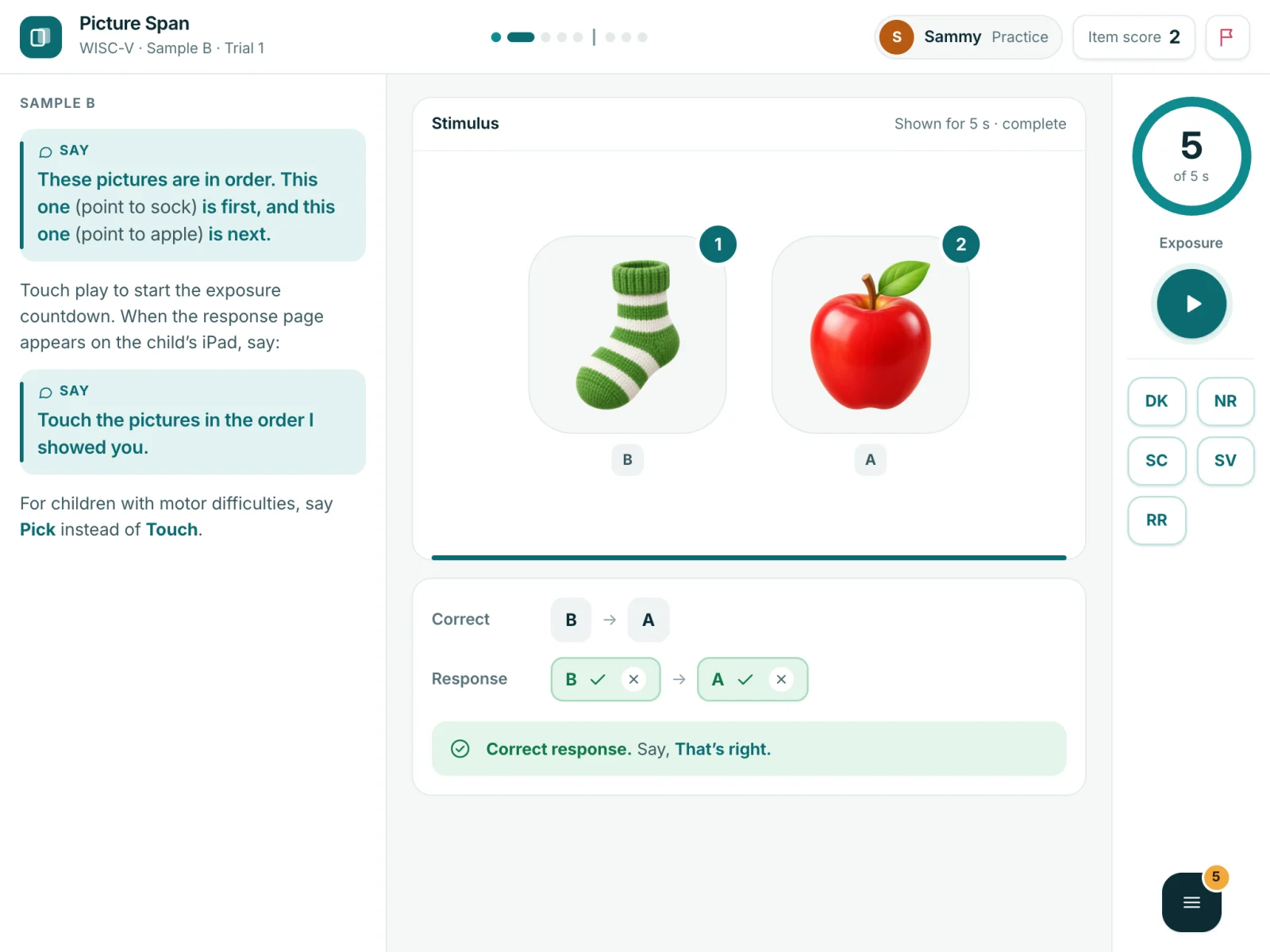
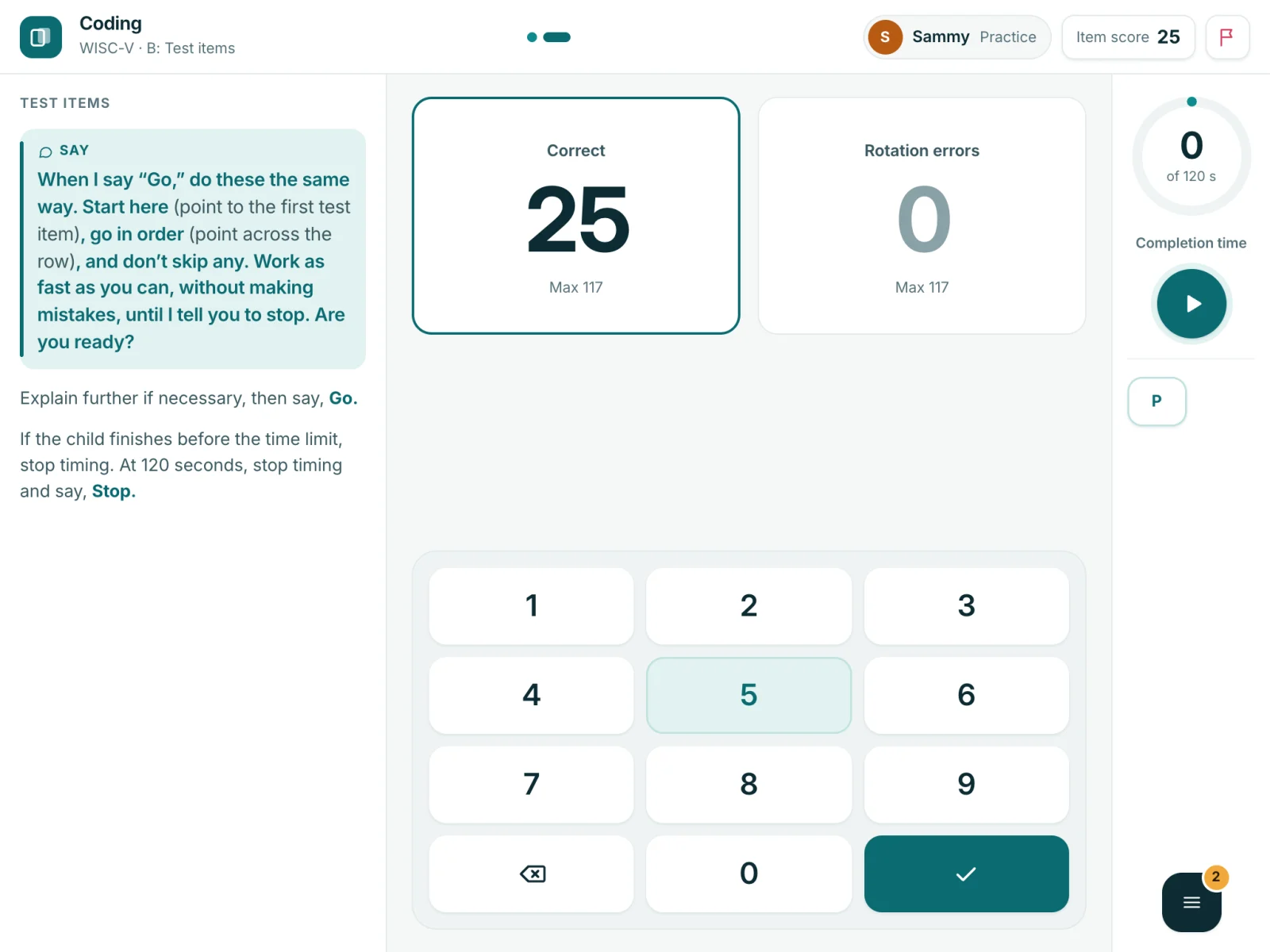
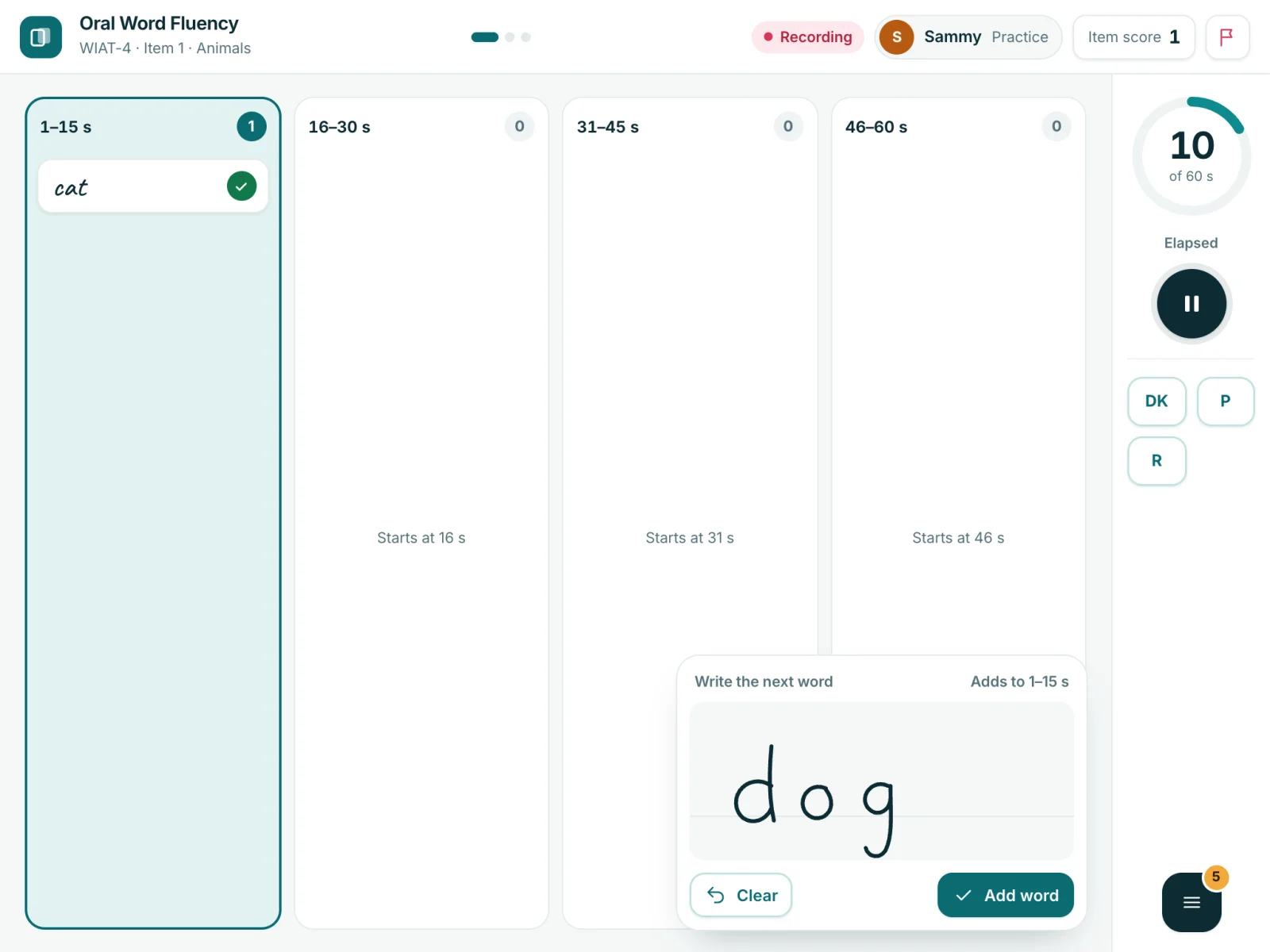
Q-interactive moves the apparatus onto two connected iPads: the child responds on one while the examiner's screen absorbs the rulebook, verbatim instructions, timers, start and discontinue logic, and response capture. I worked on interfaces for the testing experience inside hard clinical constraints: standardization could not bend, and one interface pattern had to hold across dozens of subtests so that learning one test meant learning them all, while staying approachable for a nervous eight-year-old on the other iPad.
Impact
Pearson's public beta measured an average 30% time savings over paper-and-pencil administration, and the platform has grown to more than 100,000 professionals administering over a million subtests a month. An independent study found scoring errors in all 23 paper administrations by trainees versus 9 of 23 on Q-interactive, and 89% of participants preferred the digital format. As one neuropsychologist put it: "I love the way Q-interactive reduces examiner fatigue."
Clinical Assessment
iPad App
Product Design