Episodes / Season one / E01
What makesa work yours?
Two pictures. One made by hand, one made with AI. If the same person puts their name on both, are they equally the artist?
About this episode
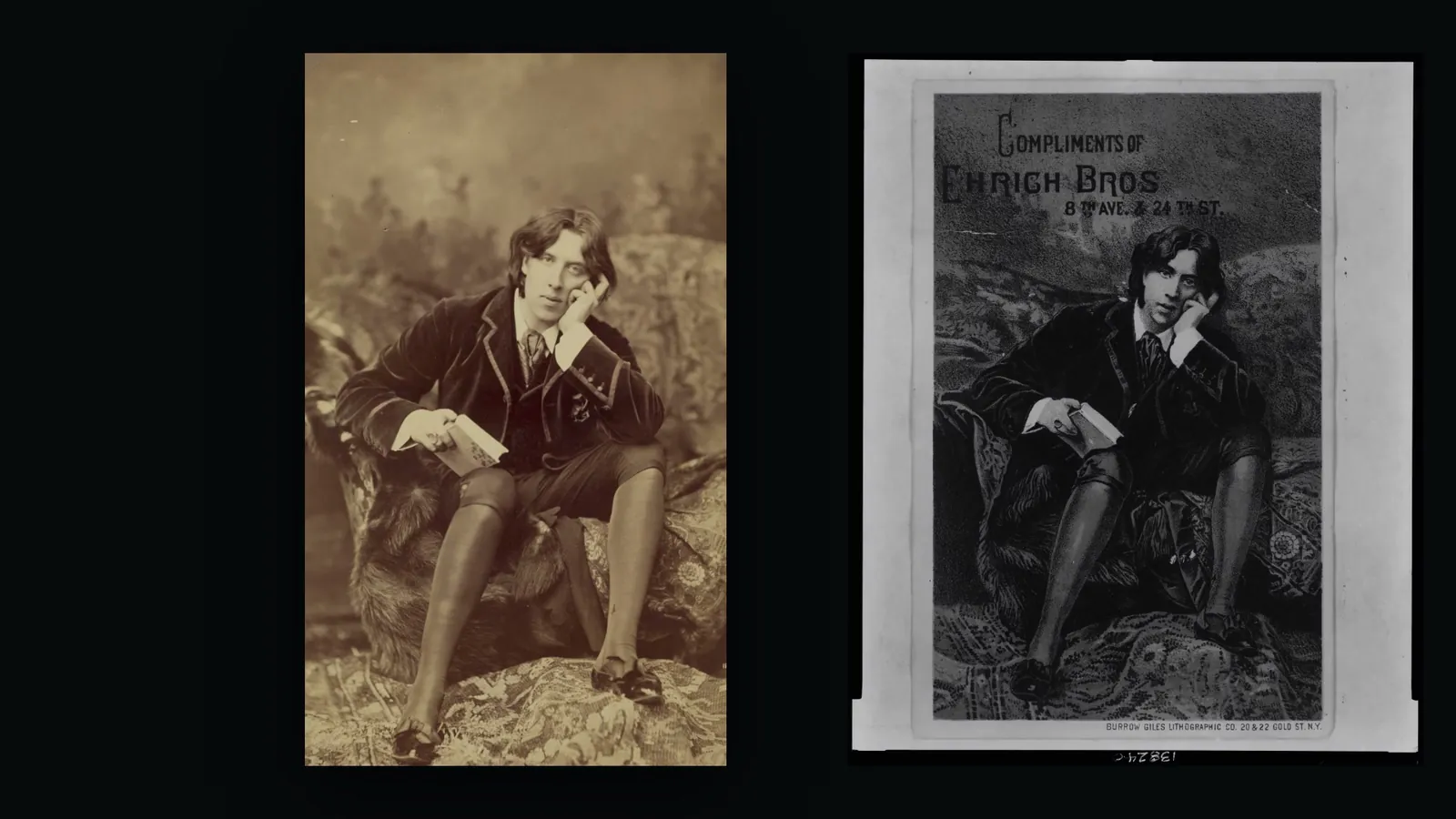
This episode follows that question from an 1884 Supreme Court case about a photograph of Oscar Wilde, through Sol LeWitt’s instructions and Brian Eno’s generative systems, to Tyler Hobbs, Sougwen Chung, Grimes’s open-source voice and the U.S. Copyright Office’s rulings on AI.
Then it imagines a design tool that has learned your taste well enough to make your decisions, and asks what’s left that we still want to do.
Chapters
- 0:00Cold open: Nick Cave and Brian Eno
- 0:37Two pictures
- 1:19The camera was the problem
- 2:25Instructions and systems: Sol LeWitt and Brian Eno
- 3:43The value of losing control
- 4:42A slot machine with an art degree
- 5:20Grimes, and an artist’s voice anyone can use
- 6:46What the law says now
- 7:58When AI learns your judgment
- 9:17Where authorship lives
- 11:03Credits
Plates
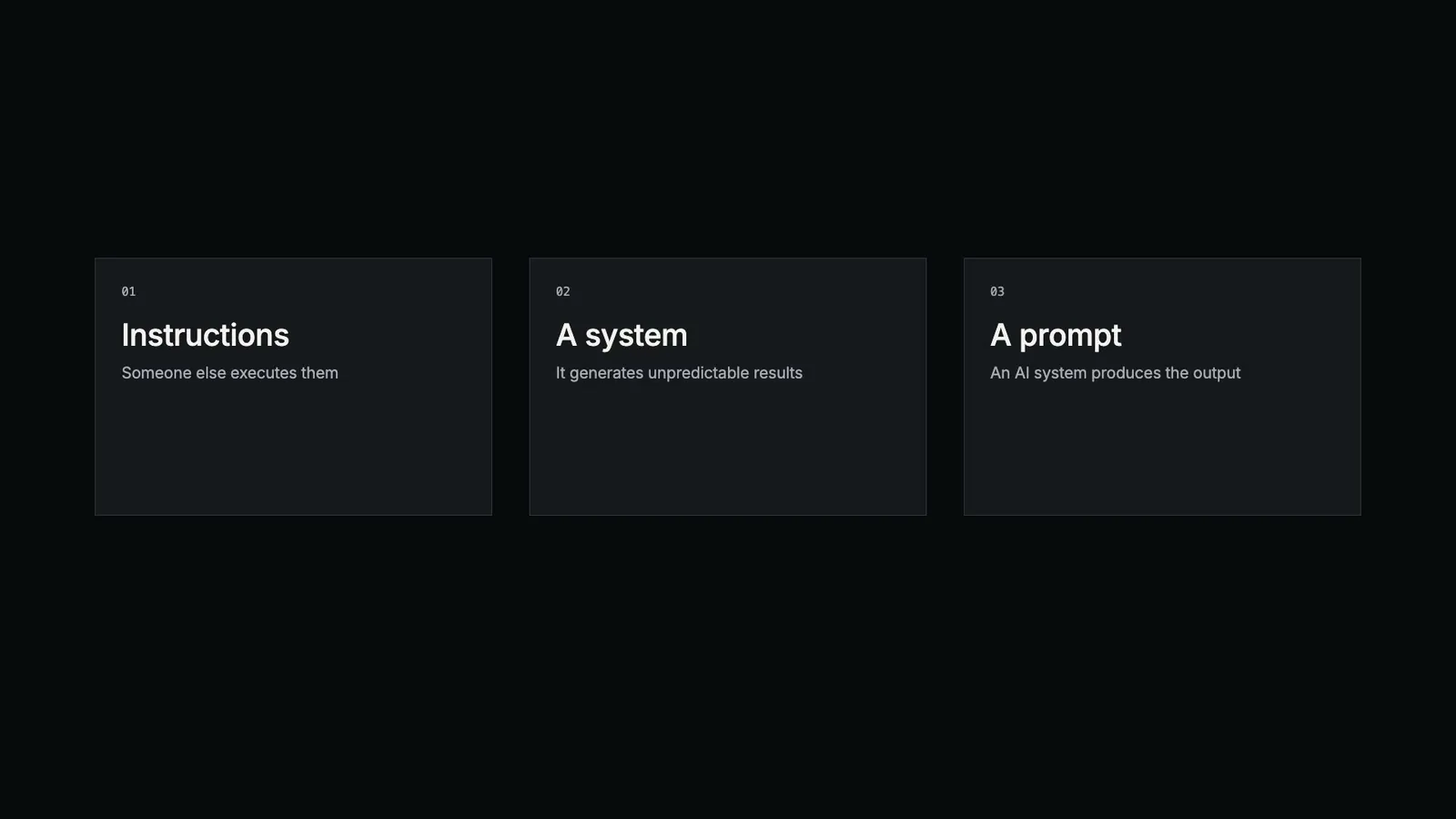
Nine moments from the film, seven of them in motion. The archive photographs are from the Library of Congress; everything else was made for the episode.
Sources, in order of appearance
- Nick Cave, The Late Show with Stephen Colbert, CBS, 2024. Watch ↗
- Brian Eno presenting Scape with Peter Chilvers (via Star Sessions). Watch ↗
- Adaptation (2002), dir. Spike Jonze, written by Charlie Kaufman, Columbia Pictures
- Oscar Wilde, No. 18, Napoleon Sarony, 1882, Library of Congress (LCCN 98519710)
- Burrow-Giles Lithographic Co. trade card, Library of Congress (LCCN 2009630810)
- Burrow-Giles Lithographic Co. v. Sarony, 111 U.S. 53 (1884)
- Sol LeWitt, Wall Drawing #797, time-lapse, Blanton Museum of Art. Watch ↗
- Sol LeWitt, Wall Drawing #831, Guggenheim Bilbao (photo CC0, Wikimedia Commons; artwork © LeWitt Estate / ARS)
- Brian Eno, BBC Click, 2017. Watch ↗
- Tyler Hobbs, OpenSea, 2026. Watch ↗
- Sougwen Chung, Reuters, 2023. Watch ↗
- Grimes, Fortune Conversations, 2026. Watch ↗
- Stephanie Dinkins, “Conversations with a robot”, Ford Foundation, #PublicInterestTech. Watch ↗
- Being John Malkovich (1999), dir. Spike Jonze, written by Charlie Kaufman, clip via Focus Features. Watch ↗
- U.S. Copyright Office, Zarya of the Dawn decision letter, February 21, 2023
- U.S. Copyright Office, Copyright and Artificial Intelligence, Part 2: Copyrightability, January 2025
- Nick Cave, The Red Hand Files #218, January 2023 (paraphrased)
Made for this film
Generative drawings, systems and diagrams: written in code for this episode.
The studio and the agent workspace are invented interfaces. The agent workspace is a speculative concept, not a real product.
Illustrations generated with Higgsfield (Nano Banana Pro).
The two pictures: a hand-coloured engraving, “The Mountain Lake Lily”, from Curtis’s Botanical Magazine, 1827 (Cleveland Museum of Art, 1955.146, CC0), and an AI image generated from it.
Music: original cues generated with ElevenLabs Music.
All excerpts remain the property of their respective owners.